
Cybersecurity Awareness and Phishing Training
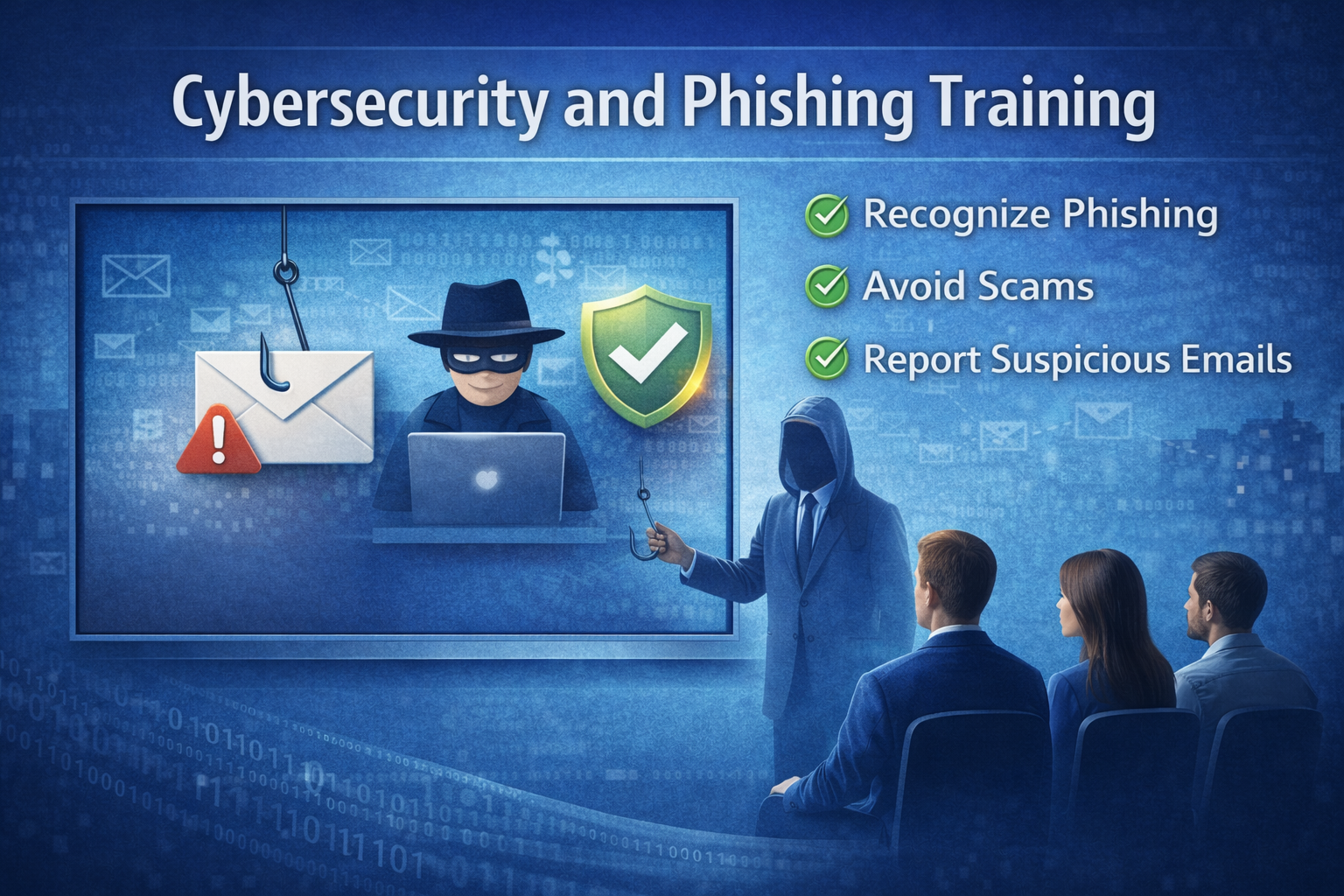
In today’s digital world, small to medium-sized businesses (SMBs) face an ever-growing array of cyber threats, and one of the most persistent and damaging threats is phishing. The consequences of a single security lapse can be devastating, leading to financial loss, reputation damage, and operational disruptions. Despite the advances in security technology, human error remains one of the top causes of breaches, and phishing emails are the most common method threat actors use to exploit weakness. For SMBs, which often have fewer resources than larger companies, fostering cybersecurity awareness and implementing effective phishing training are essential. If you read the last post, Security Starts with Strong Passwords (Click Here), now you know how to create a strong password. Now I am going to explain why cybersecurity awareness and phishing training is an essential part of any modern security strategy.
SMBs are Attractive Targets and the Threat Landscape
Cybersecurity is no longer a concern reserved for larger companies. The threat actors often focus their efforts on SMBs, because they tend to have fewer resources dedicated to cybersecurity, such as limited IT budgets, small or no dedicated security staff, and less sophisticated defenses. Many small business owners assume they are too small to be a target, but the 2024 Verizon Data Breach Investigations Report noted over 60% of all targeted attacks were aimed at businesses with fewer than 1,000 employees. The attacks exploit human error, which remains the weakest link in any security chain. A single employee clicking on a malicious link can open the door to ransomware, data theft, financial fraud, or reputation damage. According to IBM’s 2023 Cost of a Data Breach Report, a single successful phishing attack that leads to an infection with a recovery cost on average $200,000 per incident, could put many small businesses out of business.
What is Phishing?
Phishing is a type of cyberattack where threat actors pose as legitimate entities to trick individuals into revealing sensitive information or downloading malware. These attacks are most often delivered via email, text message, or even social media. These attacks often appear to be from trusted sources, like your bank, a software provider, or even your CEO.
Common types of phishing include:
- Spear Phishing – Highly targeted messages crafted for a specific individual or company
- Business Email Compromise (BEC) – Threat actors impersonate company executives or vendors to trick employees into making wire transfers or revealing credentials
- Smishing or Vishing – Phishing via SMS (smishing) or voice calls (vishing)
Threat actors are continuously refining their tactics to make phishing attacks harder to detect. Technology like spam filters and firewalls can’t stop every malicious message, that is why training your employees to recognize the red flags is critical.
The Benefits of Cybersecurity Awareness and Phishing Training
There are several technologies that are of great benefit in helping to protect your organization like spam filters, firewalls, endpoint protection, and identity management, but for SMBs where employees often wear multiple hats fostering a culture of awareness is a cost-effective way to enhance security without relying solely on these technologies.
- Reducing Human Error – Human error accounts for up to 88% of data breaches, according to a 2023 study by Stanford University. Employees may inadvertently share critical information like account login or download malicious attachments. Cybersecurity training can help employees identify suspicious emails, verify sender identities, and follow secure practices reducing the risk of breaches.
- Protecting Sensitive Data – Whether it’s customer information, employee records, or proprietary business data, every company stores information that is valuable to threat actors. A lack of awareness can lead to unintentional data leaks, such as an employee falling for a phishing email that installs malware. Teaching your employees the value of this data and the risks of mishandling it is essential.
- Ensuring Compliance – – Regulations like HIPAA, PCI DSS, and GDPR often require employee cybersecurity training. Regulatory frameworks often mandate employee training on cybersecurity best practices. Failure to comply can result in hefty fines and reputational damage. Regular training helps SMBs meet compliance requirements while fostering a proactive security culture.
- Building a Security-Minded Culture – When all employees in your company understand their role in cybersecurity, they are more likely to follow best practices and report suspicious activity. This creates a proactive culture where security is a shared responsibility. Trained employees are more likely to report phishing attempts or unusual activity, enabling faster response and mitigation.
Phishing attacks are a leading cause of security incidents, making targeted training an essential component of any cybersecurity strategy. Phishing training goes beyond general awareness by focusing on the specific tactics threat actors use to manipulate employees. It combines education with practical exercises to build resilience against these attacks.
- Understanding Phishing Tactics – Phishing attacks come in many forms, including spear phishing (targeting specific individuals), whaling (targeting executives), and smishing (SMS-based phishing). Training employees to help them identify common tactics, such as urgent language, spoofed email addresses, or fake login pages. A phishing email might mimic a trusted vender requesting an immediate payment, or a request to reset your password before you get locked out of the account.
- Simulated Phishing Exercises – One of the most effective ways to prepare employees is through simulated phishing emails. These exercises send simulated phishing emails to test their ability to identify and report suspicious messages. If an employee clicks on a simulated malicious link, they receive immediate feedback and training. Studies show regular phishing simulations reduce click rates by 50% within six months.
- Building a Reporting Culture – Training encourages employees to report suspicious messages rather than ignoring them. A report by Proofpoint found companies with strong reporting cultures detect and mitigate phishing attacks 30% faster.
What Makes a Good Cybersecurity Training Program?
A successful program goes beyond a one-time PowerPoint presentation. To maximize the impact of the training it should be ongoing, engaging, and relevant. Here are some key components to look for:
- Assess Current Risks – Identify the types of data you handle, and the industries you serve. For example, a retail store may face phishing emails targeting payment systems, while a healthcare provider will face attacks looking for patient information. This assessment informs you of the focus of your training program.
- Regular Phishing Simulations – Conduct simulated phishing campaigns on a regular basis. Vary the scenarios to cover different types of attacks, such as fake invoices, login prompts to verify credentials, or urgent requests from “executives”. These simulations provide immediate feedback to employees who fall for the simulations, reinforcing learning.
- Develop Engaging Content – Incorporate interactive elements like quizzes, videos, and gamified learning to keep employees invested. Boring, text-heavy materials won’t make an impact, and avoid technical jargon, focus on practical, actionable advice.
- Frequent Refreshers – Cyber threats evolve rapidly, and training must keep pace. Update content to reflect new phishing tactics like AI-generated deepfake emails. Conduct short refresher courses quarterly or biannually.
- Metrics and Feedback – Make it simple for employees to report suspicious emails. Implement a “Report Phishing” button in your email client. Track participation, phishing test results, and incident reports and use this data to fine-tune your program and demonstrate its value.
The Cost of Inaction
As mentioned above, the average cost of a data breach is about $200,000, enough to put many out of business.
- Cost Savings - The financial impact of a cyberattack can cripple a company. Beyond direct losses, such as ransom payments or stolen funds, companies face indirect costs like legal fees, and downtime. Cybersecurity awareness and phishing training are proactive measures that reduce the likelihood of successful attacks.
- Reputation Protection – Companies rely heavily on customer trust. A data breach could erode confidence, leading to lost business and long-term reputational damage. By implementing training, it shows a commitment to protecting customers’ data, which can enhance brand loyalty.
- Operational Continuity – Cyberattacks like ransomware can halt operations, customer service, and revenue stream. Training employees to recognize phishing attempts minimizes the rise of disruptions. For companies with limited resources, maintaining operations during a crisis is critical to survival.
Conclusion
Cybersecurity awareness and phishing training are not optional; it is an essential line of defense against a growing tide of cyber threats. For companies where every dollar and every minute counts, preventing a breach is far more cost-effective than cleaning up after one. By training employees, conducting regular phishing simulations, and fostering a security-first culture, companies can significantly reduce their risk of costly breaches. If you need help with setting up a training program we can help. Please feel free to reach out to us.