
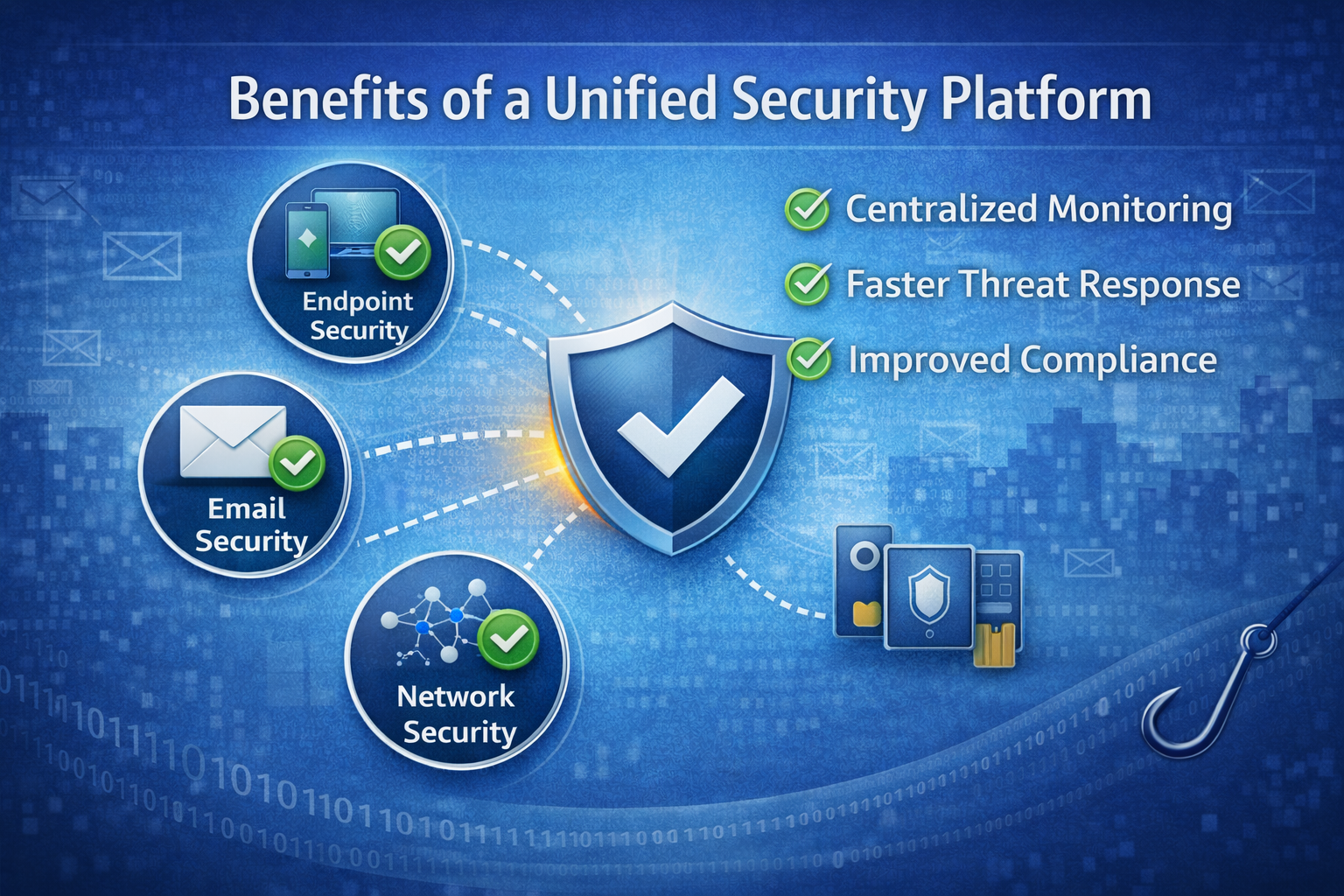
Benefits of a Unified Security Platform
In today’s business environment, cybersecurity threats are more sophisticated and frequent. Organizations are under constant attack from external threats like ransomware and internal threats, all while managing diverse IT environments that combine on-premises, cloud, and hybrid systems. To combat these threats effectively, businesses are increasingly turning to a unified security platform. A unified security platform integrates multiple cybersecurity tools and services into a single, cohesive system, streamlining visibility, management, and response.
What is a Unified Security Platform?
A unified security platform integrates disparate tools – including firewalls, endpoint protection, identity management, and wireless – into a single cohesive solution. Unlike traditional security solutions operating in silos, a unified security platform centralized visibility and management of your company’s entire security ecosystem. By consolidating these tools into a single platform it reduces complexity, improves efficiency, and enhances you to be able to detect and respond to cyberthreats.
Centralized Visibility and Management
One of the most significant advantages of a unified security platform is the comprehensive visibility it provides across the IT ecosystem. Traditional security setups involve multiple tools each with their own dashboard, alerts, and reporting. This approach can create blind spots and make it difficult to correlate data.
A unified security platform solves this problem by bringing security data into a single platform. This centralized visibility allows you to:
- See all activity across firewalls, endpoints, identity, and networks
- Reduce blind spots threat actors can exploit
Centralized management also simplifies administrative tasks. IT teams can configure policies, deploy updates, and manage alerts from a single console. This approach saves time and reduces the likelihood of human error, which is a common cause of security breaches.
Faster Detection and Response to Threats
Time is critical during a cyberattack. Cyber threats are becoming increasingly sophisticated, with threat actors leveraging techniques like zero-day exploits, fileless malware and multi-vector attacks. A unified security platform enhances threat detection with advanced analytics, machine learning, and artificial intelligence to analyze the security data. By correlating data from endpoints, firewalls, network, and identity, a unified security platform can identify patterns indicating a potential attack. This contextual analysis detects threats earlier than standalone tools.
A unified security platform often includes automated responses to the detection of these threats and acts. The platform detects a potential threat, and it can take actions like isolate the device, block the IP address, or quarantine the suspicious file. This rapid response minimizes the opportunity for the threat actor and reduces potential damage.
Reduced Complexity
Managing multiple, disconnected cybersecurity tools is time consuming and prone to errors. Each system requires:
- Individual configurations
- Separate patching and updates
- Ongoing training to stay familiar with interfaces and capabilities
A unified security platform reduces complexity by consolidating multiple functions into a single solution. This eliminates the need for multiple tools and simplifies vendor management. Fewer tools also mean lower licensing and maintenance costs. This streamlined approach lowers the learning curve and allows focus on strategic security initiatives rather than routine administrative tasks.
Better Threat Intelligence
Modern cyberattacks are increasingly sophisticated. Threat actors are constantly evolving tactics. To stay ahead, companies need real-time data on emerging threats and their potential business impact.
Unified security platforms leverage threat intelligence service to analyze and act on information gathered worldwide. These insights are automatically integrated into the platform, which:
- Updates detection rules
- Helps prioritize alerts based on the latest threats
- Provides actionable recommendations to strengthen your defenses
Scalability and Flexibility
As your company grows your cybersecurity needs will evolve. Unified security platforms are designed to match company needs, offering modular features with ability to be added or adjusted as required. A unified security platform can seamlessly integrate new modules without requiring complete overhaul of existing infrastructure. This scalability ensures companies can adapt to changing threat landscapes and business requirements without incurring significant costs or disruptions. These platforms are constantly updated by the vendor, ensuring your defenses adapt to emerging threats without the need for frequent intervention. These platforms are also flexible enough to support diverse IT environments; this is critical in today’s multi-cloud world.
Compliance and Reporting
Compliance with industry regulations and standards like GPDR, HIPAA, and PCI DSS, is a priority for many companies. Compliance can be challenging when data is scattered across multiple tools.
A unified security platform helps simplify compliance with centralized logging, monitoring, and reporting capabilities. Many platforms also include pre-built templates for common frameworks, reducing the time and effort to meet compliance requirements.
Unified platforms help companies maintain a consistent security posture across all environments. This is particularly important for companies in highly regulated industries like healthcare, finance, and government.
Enhanced Collaboration and Productivity
Cybersecurity is a team effort, requiring collaboration between IT staff, employees, and any external consultants. However, siloed tools can hinder communication and create inefficiencies. A unified platform fosters collaboration by providing a single source for all security data. For example, you are notified of an emerging threat, you can implement any necessary patches or make configuration changes to guard against the threat.
By reducing the time spent on manual tasks, your teams can focus on strategic initiatives rather than getting bogged down in repetitive administrative work.
Conclusion
In a world where cyber threats are more complex and pervasive than ever, companies can’t afford to rely on fragmented, siloed security solutions. A unified platform offers a streamlined approach to cybersecurity, delivering visibility, threat detection and response, and simplified compliance. By consolidating tools, improving collaboration, and providing scalability, these platforms enable companies to stay ahead of threats and protect their critical assets. If you have any questions, please feel free to reach out to me.